Trending

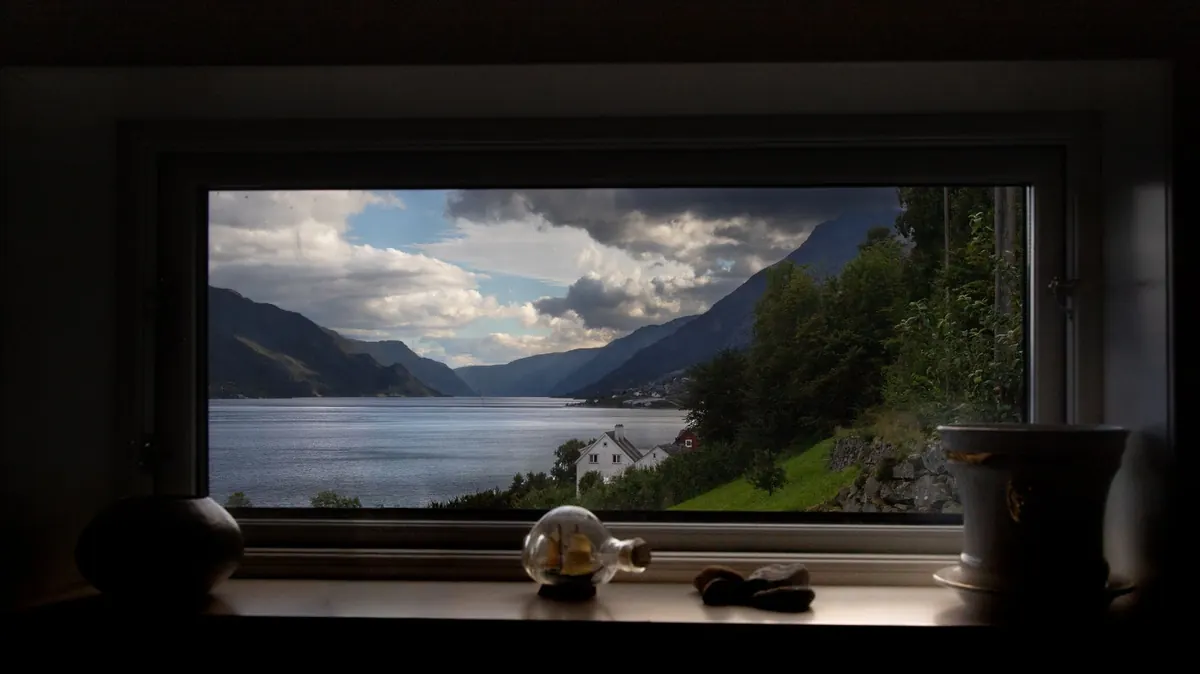
A cottage listing can promise a valley view and keep that promise in the least useful way imaginable: through a skylight, over a wall, or from the top step of the stairs. The photograph is honest. It is also useless.
The gap between what a listing shows and what you find on arrival is small, and it turns up in the same four places every time — the map, the photos, the adjectives and the reviews. Read all four with a little suspicion and you will book far better.
A photograph shows what the owner wants you to see. A satellite view shows what is actually there. Drop the listing's pin into aerial view and zoom in until walls and roofs are visible.
Then ask the question the listing will never answer for you: what stands between the window and the view?
In the Dales the answer is usually one of five things, and all five are plainly visible from above.
While you are up there, work out which way the main windows face. South and west means evening light on the fells and a sitting room worth sitting in. North means a view you will admire for four minutes in the morning and then close the curtains on. The listing will call both of them "far-reaching".
A wide-angle lens is not a lie. It is a compression of the truth, and it is the reason the kitchen looks twice the size and the garden looks like a field.
Read the gallery backwards. Ask not what each photograph shows, but what it refuses to show.
Ceilings matter more than most galleries admit. In a converted barn or an old lead-miner's cottage, beams are charming and low. Look for a person in a photograph — a head near a beam is the single most useful thing on the entire page. If there is no person, look at the door heights. A stable door with its top half closed is sometimes closed for a reason.
The description is where the writing gets vague, and vagueness is information. Owners use the same small vocabulary because it is elastic, and because it cannot be contradicted on arrival.
Here is a rough translation, earned by experience rather than cynicism.
The words that survive scrutiny are the boring ones: the measurements, the postcode, the number of steps to the door, the distance to the nearest shop. A listing that gives you these is usually a listing with nothing to hide.
Watch the distance language in particular. "A short drive from Hawes" can mean ten minutes and it can mean thirty-five. "Walking distance to the pub" means something different in the Dales than it does on a suburban street, and the difference is usually about two hundred metres of vertical ascent. Put the postcode into a map and measure it yourself before you let yourself be persuaded.
Most people book on the average score. The average score is the least informative number on the page.
Read the four-star reviews first. They are written by people who liked the place and are therefore willing to be honest about the one thing that annoyed them. Three-star reviews are the most candid of all, because the guest is neither grateful nor furious.
Specifically, look for:
Photographs in reviews are worth more than photographs in the listing, because nobody stages them. They are grubby, badly framed and true.
Run the following before you enter card details. It takes less time than reading the reviews properly, and it will save you a week.
Owners who are proud of a property answer these quickly and in detail. Owners who are not will answer vaguely, and the vagueness is your answer.
"Can you see the view from the sofa, or do you have to stand up?" This is the whole question of a cosy stay with a view, compressed into one sentence, and it cannot be settled by a photograph taken upright in a doorway.
"What is between the property and the view?" Ask it plainly. A good owner will tell you about the barn, the ash tree, and the fact that the best of the light is in the back bedroom. That is not a flaw in the listing. That is a listing worth trusting.
The point of all this is not to find fault. It is to arrive knowing what you have booked, so that the moment you open the door — onto a room full of evening light, or onto a wall — is a moment of recognition rather than adjustment.
Photo: Franco Sulli / Pexels